
Silent disco
Listen in complete peace to unhurried pianola recordings of Wagner excerpts made by Felix Mottl in 1907 — or to the selection of rare recordings of Wagner and other singers that Frank van Aken compiled at our request. He briefly introduces each recording. Take a seat in one of the lounge chairs and, with a wireless headset on, let yourself be carried away by sounds from a bygone era. The location of the silent disco is not yet fixed: please ask at the entrance where to find us.
Location
Locatie nog niet bekend — vraag bij de ingang
Dates and times
Thu 20 — Sat 22 Aug · 15:00–17:00 Sun 23 Aug · 13:00–17:00
Accessible throughout the festival days.
Free admission
Performers
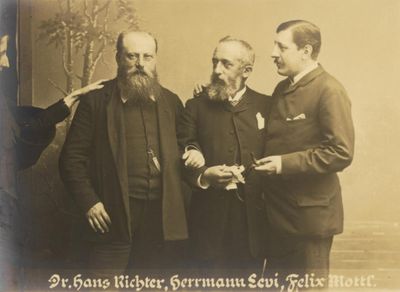
Felix Mottl
Felix Josef von Mottl (1856–1911) was an Austrian conductor and composer. He was regarded as one of the most brilliant conductors of his time. His orchestration of Richard Wagner's "Wesendonck Lieder" remains the most frequently performed version to this day. Mottl was born in Unter Sankt Veit, now Hietzing, Vienna, in 1856. His date of birth has been reported in various ways as 29 July, 24 August and 29 August. After an early vocal training at the Löwenburg Konvikt, a school for the imperial court chapel, he had a successful career at the Vienna Conservatoire. He was quickly recognised as a gifted conductor of Wagner's music, assisted Hans Richter in preparing the first complete Ring cycle at Bayreuth in 1876, and himself conducted Tristan und Isolde at Bayreuth in 1886.
Felix Josef von Mottl (1856–1911) was an Austrian conductor and composer. He was regarded as one of the most brilliant conductors of his time. His orchestration of Richard Wagner's "Wesendonck Lieder" remains the most frequently performed version to this day. Mottl was born in Unter Sankt Veit, now Hietzing, Vienna, in 1856. His date of birth has been reported in various ways as 29 July, 24 August and 29 August. After an early vocal training at the Löwenburg Konvikt, a school for the imperial court chapel, he had a successful career at the Vienna Conservatoire. He was quickly recognised as a gifted conductor of Wagner's music, assisted Hans Richter in preparing the first complete Ring cycle at Bayreuth in 1876, and himself conducted Tristan und Isolde at Bayreuth in 1886.
From 1881 to 1903 he was chief conductor of the Karlsruhe Opera and was universally known for his work there, particularly in Wagner, Berlioz and Chabrier, whose operas he championed. He also orchestrated Chabrier's Bourrée fantasque and Trois valses romantiques, and arranged a popular suite of orchestral excerpts from the operas of Christoph Willibald Gluck. In later years, primarily as a conductor of Wagner, he visited Amsterdam, London and New York, where he was guest conductor at the Metropolitan Opera in 1903. In 1904 he was appointed director of the Academy of Fine Arts in Berlin.
In June 1907 he recorded several piano rolls with the Welte-Mignon pianola system, including his own piano transcriptions of excerpts from Parsifal and Tristan und Isolde. On 21 June 1911 he suffered a heart attack while conducting his 100th performance of Tristan in Munich. Eleven days later, on 2 July, Mottl died at the age of 54, but not before marrying his long-time lover, the soprano Zdenka Faßbender.
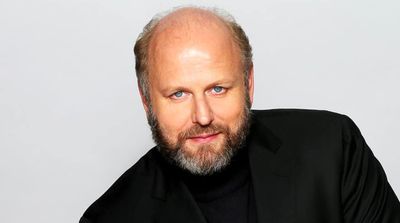
Frank van Aken
Frank studied voice in Utrecht and at the Opera Studio of the Royal Conservatoire in The Hague. He subsequently studied with James McCray. After a permanent appointment at the Deutsche Oper am Rhein in Düsseldorf in roles such as Lohengrin, Florestan, Bacchus, Siegmund and Parsifal, he joined the ensemble of the Oper Frankfurt. There he sang, among others, Siegmund, Tannhäuser, Parsifal and Tristan. His repertoire includes roles such as Aegisthus, Erik, Max, Tristan, Otello and Herod. He sang Tannhäuser in Bayreuth, at the Vienna State Opera, the Gran Teatro del Liceu in Barcelona, the Festspielhaus Baden-Baden, Santiago de Chile, the Budapest Opera and the Semperoper Dresden. Frank made his debut at La Scala as Siegmund and sang the same role at the Metropolitan Opera.
Frank studied voice in Utrecht and at the Opera Studio of the Royal Conservatoire in The Hague. He subsequently studied with James McCray. After a permanent appointment at the Deutsche Oper am Rhein in Düsseldorf in roles such as Lohengrin, Florestan, Bacchus, Siegmund and Parsifal, he joined the ensemble of the Oper Frankfurt. There he sang, among others, Siegmund, Tannhäuser, Parsifal and Tristan. His repertoire includes roles such as Aegisthus, Erik, Max, Tristan, Otello and Herod. He sang Tannhäuser in Bayreuth, at the Vienna State Opera, the Gran Teatro del Liceu in Barcelona, the Festspielhaus Baden-Baden, Santiago de Chile, the Budapest Opera and the Semperoper Dresden. Frank made his debut at La Scala as Siegmund and sang the same role at the Metropolitan Opera.
Engagements in recent seasons have taken him to the Oper Frankfurt, De Nationale Opera Amsterdam, the Hungarian National Opera in Budapest, the Berliner Staatsoper, the Greek National Opera in Athens, the National Theatre Mannheim, the Concertgebouw Amsterdam and the Hessisches Staatstheater in Wiesbaden. In the 2019/20 season he performed with the Orquesta Nacional de España in Madrid as Tristan and made his debut at the Atlanta Opera as Herod in Salome. He recently portrayed the role of Aegisthus in Elektra with the Tokyo Symphony Orchestra in Japan.